


Why the African Travel Trade Show Is Thriving in a Digital Era
Thought-Leadership Article
By: Carol Weaving, Managing Director, RX Africa
As trade show season gets underway in South Africa, traditional shows have come under fire for being antiquated, expensive and out of touch with the realities of a digital-first world. Critics argue that in an era of tech, tools and online platforms, physical events can no longer justify their cost. Yet at sold-out shows like WTM Africa, the reality feels quite different.
Far from becoming obsolete, today’s leading travel shows are evolving into powerful in-person events where technology handles the heavy (admin and logistical) lifting and humans focus on the relationship-building that defines this industry. Because the travel sector has always been a “people” industry, selling high-value, high-stakes experiences.
The trust gap is real
As an example, an international agent sending a client to a remote corner of the Okavango isn’t just vetting a transaction – they’re staking their reputation on the entire visitor experience, from booking to arrival and beyond. Yes, online reviews and historical booking data tell part of the story – but they cannot fully bridge the “trust gap” that still exists in African travel.
Trust is built through referrals, long-standing reputations and face-to-face interaction. A conversation across a table often reveals far more about an operator’s reliability, professionalism and character than an online profile can convey.
Africa’s product isn’t fully online
This is particularly relevant on the African continent. Many exceptional experiences and smaller operators, especially in rural or emerging destinations, have not yet made significant investments into digital marketing, SEO or AI tools. Relying solely on an online presence risks overlooking these hidden gems that add real diversity and authenticity to travel offerings. Trade shows give them a stage.
WTM Africa actively works to include emerging and community-based operators through regional pavilions and targeted matchmaking with hosted buyers. The international buyer who would never organically find a small Limpopo safari operator online can sit across from them on Tuesday morning, get a real sense of the offering, ask the right questions, and book their first group by Friday.
Importantly, modern trade shows have embraced technology to maximise efficiency and deliver strong return on investment.
AI-driven matchmaking tools now pre-schedule meetings between the right buyers and suppliers – nobody is wandering the floor hoping to bump into the right person. Delegates arrive with a targeted, data-backed itinerary and spend their show time in high-value conversations. Real-time analytics allow organisers to fine-tune content and engagement on the spot, while digital twins of venues help attendees plan their visit in advance. These innovations do the “grunt work”, streamlining calendars, reducing scheduling conflicts and creating custom itineraries tailored to each participant’s needs.
The magic happens in the in-between
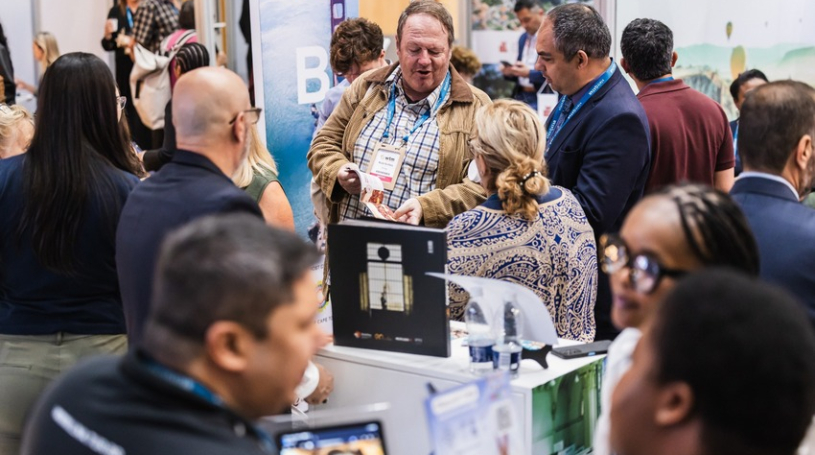
At WTM Africa, for example, technology is used to facilitate meaningful networking rather than replace it. The event combines smart matchmaking with immersive, relaxed activations that encourage authentic connection. One standout initiative saw the energy of a Stellenbosch Street Soirée brought directly into the CTICC, creating a setting where delegates could interact in a fun, unintimidating environment. Such community-driven experiences reflect the desire of today’s professionals – including younger generations – for both efficiency and genuine human engagement.
Gen Z is choosing in-person – on purpose
The assumption that a digitally fluent generation will naturally drift away from physical events turns out to be exactly wrong. Gen Z – digital natives who have never been far from a screen – are actively seeking out immersive, in-person experiences. They value speed and efficiency (which tech delivers) and authentic human connection (which the show floor delivers). They're not attending trade shows because their bosses told them to. They're going because it's where learning happens (for example, through considered speaker programmes), careers are built, and real conversations take place.
Critics often focus on the financial cost of exhibiting – booth space, travel, staffing and design. However, when used strategically alongside digital tools, this investment delivers long-term relationship capital that is difficult to measure through simple cost-per-lead calculations. A single strong partnership formed at a trade show can generate sustained business for years, far beyond the transactional nature of many digital leads.
As WTM Africa and other key events sell out ahead of the season, the message is clear. Trade shows are not dusty relics of an analogue past. They are evolving into sophisticated hybrid hubs where technology streamlines the process, and humans deliver the relationships that power African travel.
For more information contact Olivia Gradidge - olivia.gradidge@rxglobal.com