


Marine Dynamics Wins International Award for Turning Tourism into Conservation Action
Press Release by Marine Dynamics, July 2026
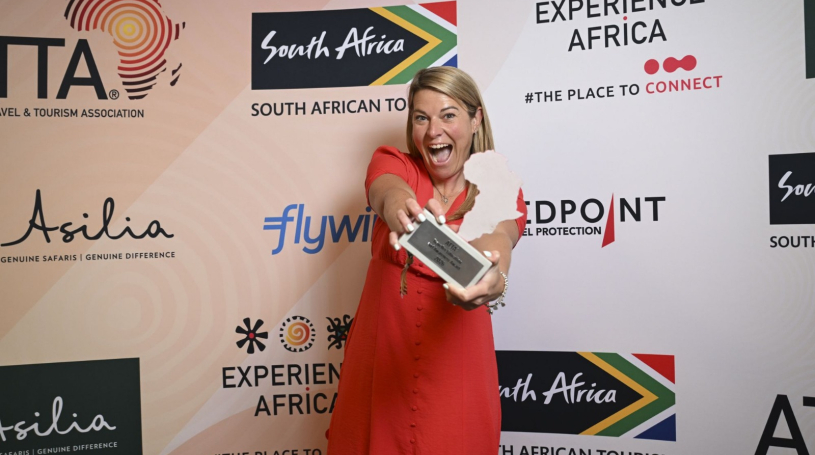
Marine Dynamics has been named a joint winner of the prestigious ATTA® Traveller Education and Awareness Award, sharing the honour with Blood Lions in a historic first for the ATTA® for Action Awards. The achievement marks a second consecutive ATTA® award for Marine Dynamics, following its Marine Impact Award win in 2025, and reinforces the organisation's position as a leader in conservation-led tourism and environmental education in Africa.
The recognition celebrates organisations that successfully educate travellers to become more responsible visitors and create positive social, environmental and conservation outcomes across Africa. This year marked the first time in the awards’ history that two organisations shared a category win, reflecting the exceptional quality and impact of both programmes.
For Marine Dynamics, the award is not simply recognition of educational excellence – it is validation of a model that demonstrates how tourism can become a powerful force for conservation.
At the heart of the organisation’s approach is a simple principle: education creates awareness, awareness inspires action, and action drives conservation impact.
Through its marine ecotourism experiences, environmental education programmes, scientific research, wildlife rehabilitation initiatives and community outreach projects, Marine Dynamics and the Dyer Island Conservation Trust reached 70,000 people in 2025 alone.
The impact extends beyond awareness. Independent research found that 74% of participants adopted at least one environmentally friendly behaviour within four weeks of their experience, while 40% adopted four or more positive environmental behaviours.
The programme also generated more than R3 million for marine conservation initiatives through conservation fees and donations, directly supporting research, environmental programmes and wildlife rehabilitation.
The judges described Marine Dynamics as:
“An exceptionally strong example of conservation-led tourism education that successfully connects tourism, research, wildlife rehabilitation and community engagement into one highly impactful model.”
They further praised the organisation’s ability to translate complex marine science into engaging educational experiences for international visitors, local schools and community groups, creating meaningful and lasting conservation impact.
Over the past 25 years, Marine Dynamics has developed an integrated ecosystem that combines responsible tourism, conservation, research, education and community development. Together with the Dyer Island Conservation Trust (DICT), Marine Dynamics Academy, the African Penguin and Seabird Sanctuary (APSS) and the Great White House, the organisation has created a platform where every visitor encounter contributes to a broader conservation journey.
Each year, thousands of guests experience South Africa’s Marine Big 5 while learning about marine ecology, endangered species, climate challenges, marine pollution and the role individuals can play in protecting biodiversity.
This educational journey continues beyond the boat.
Through the African Penguin and Seabird Sanctuary, visitors witness conservation in action while learning about the threats facing the Critically Endangered African Penguin.
The organisation’s impact also extends into local communities through the Dyer Island Conservation Trust Environmental Education Programme (DEEP), which has empowered more than 130 local learners since 2016, as well as through school programmes, community Marine Evening events and marine conservation awareness campaigns.
Scientific research remains a cornerstone of the model. Over two decades, the Dyer Island Conservation Trust has contributed to more than 40 peer-reviewed scientific publications, helping advance understanding of sharks, whales, seabirds, seals and marine ecosystems while making science accessible through public engagement and education.
According to Wilfred Chivell, Founder and CEO of Marine Dynamics and Founder of the Dyer Island Conservation Trust, the award recognises the power of education to create long-term conservation outcomes.
“We are incredibly honoured to receive this recognition from ATTA® and especially proud to share this award with Blood Lions, an organisation that has made an extraordinary contribution to responsible wildlife tourism and traveller education.”
“For more than two decades, we have believed that tourism should do more than create memorable experiences. It should inspire people, support science, protect wildlife and contribute positively to local communities. This award validates that vision and demonstrates that informed travellers can become powerful ambassadors for conservation.”
“Every day we see the ripple effect of education. A guest learns something new, changes a behaviour, supports a conservation initiative, shares their experience, and inspires others to care. That ripple effect is how lasting conservation change happens.”
The award comes during a milestone period for the Marine Dynamics ecosystem, marking 25 years of Marine Dynamics, 20 years of the Dyer Island Conservation Trust and 10 years of the African Penguin and Seabird Sanctuary.
As Africa continues to lead the way in responsible and conservation-driven tourism, this recognition reinforces the important role tourism can play in educating travellers, supporting science, protecting wildlife, empowering communities and creating meaningful conservation outcomes for future generations.
About Marine Dynamics
Marine Dynamics is a leading marine ecotourism organisation based in Gansbaai, South Africa. Through an integrated ecosystem that combines tourism, conservation, research, education and community engagement, Marine Dynamics works to protect the unique biodiversity of the Greater Dyer Island ecosystem. Together with the Dyer Island Conservation Trust, Marine Dynamics Academy and the African Penguin and Seabird Sanctuary, the organisation demonstrates how tourism can be a powerful force for positive environmental and social impact.